
The update
Sonnet 5 brings planning and tool use to the default model
Anthropic released Claude Sonnet 5 on 30 June across every Claude plan. It became the default model for Free and Pro users, and is also available through Claude Code and the Claude Platform.
Anthropic says the model can plan, use browsers and terminals, and carry longer tasks through to completion. TechCrunch and Axios both focused on the same change: capabilities once reserved for the most expensive tier are moving into Sonnet.
Why it is useful
The cost of trying a custom workflow has come down
Anthropic launched Sonnet 5 with introductory API pricing of $2 per million input tokens and $10 per million output tokens until 31 August. Standard pricing then moves to $3 and $15 respectively.
Costs will still depend on the amount of context and work involved. The lower entry price makes it cheaper to test whether an agent can handle a useful part of the work, from a research route to an internal tool or content process.
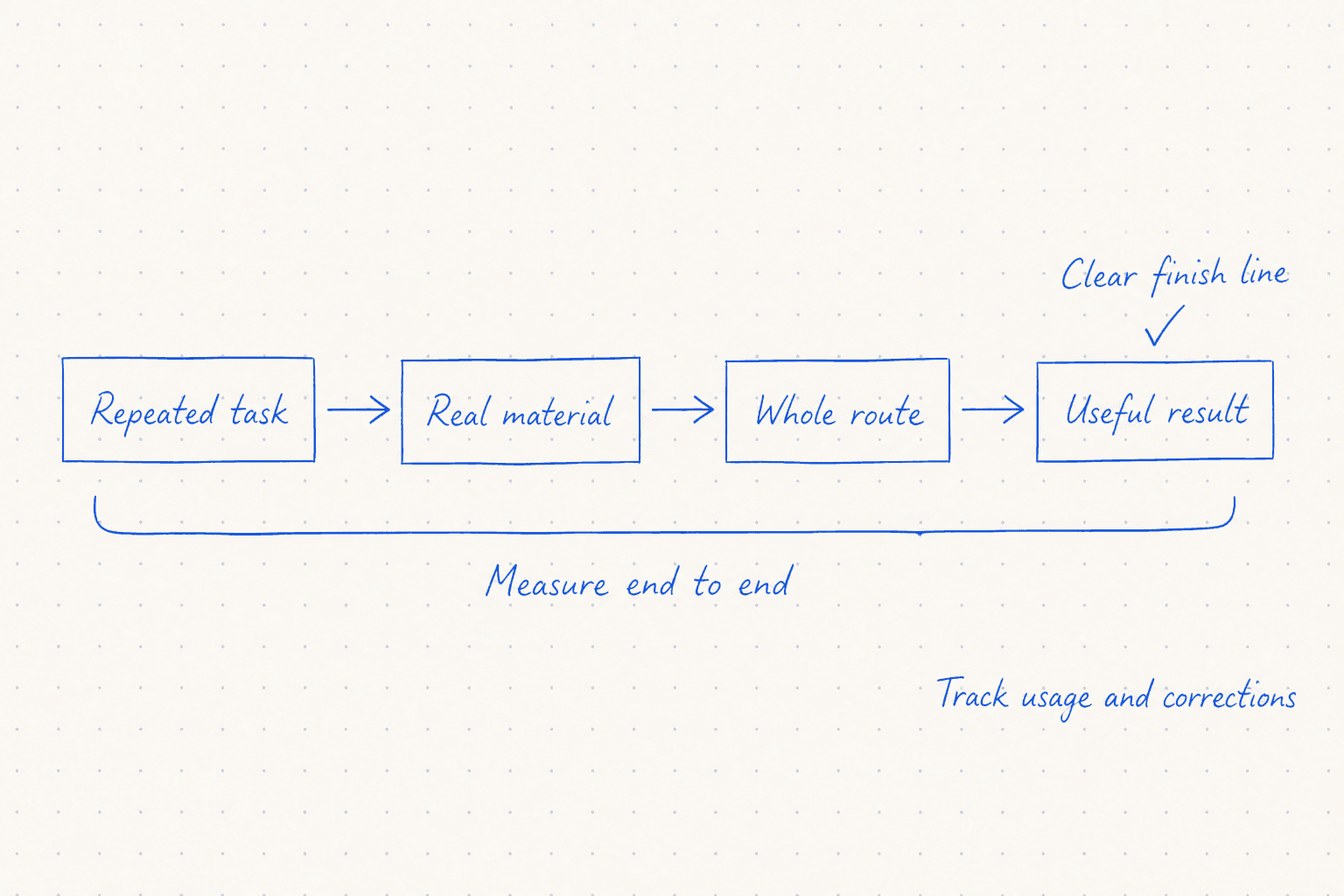
- Choose one repeated task with a clear finish line.
- Measure whether the agent completes the whole route, not only the first step.
- Track usage on real material because token counts can change between model versions.
A handwritten route moves from a repeated task through real material and the whole workflow to a useful result, with one bracket measuring it end to end.
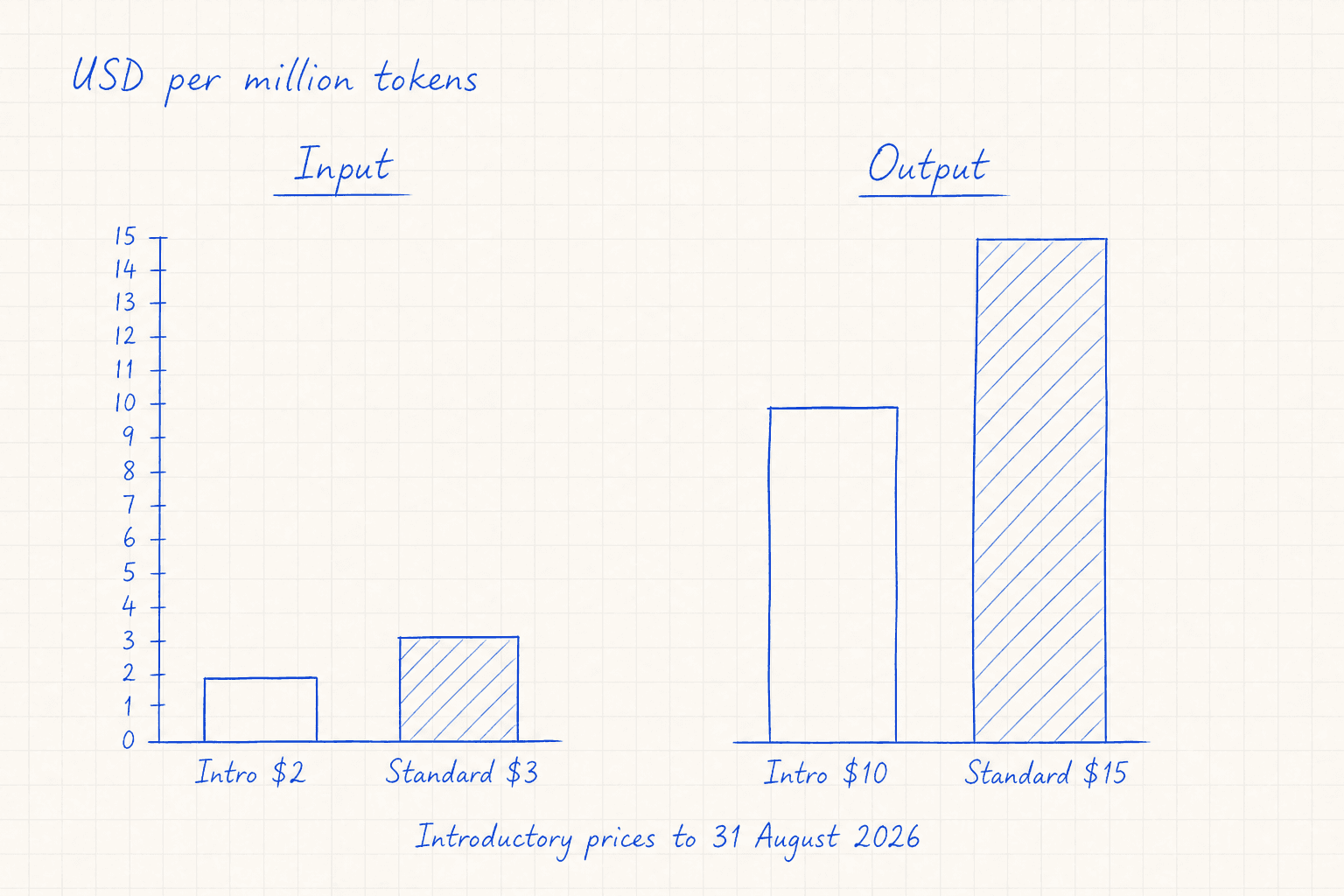
USD per million tokens
The practical check
A capable model still needs a product around it
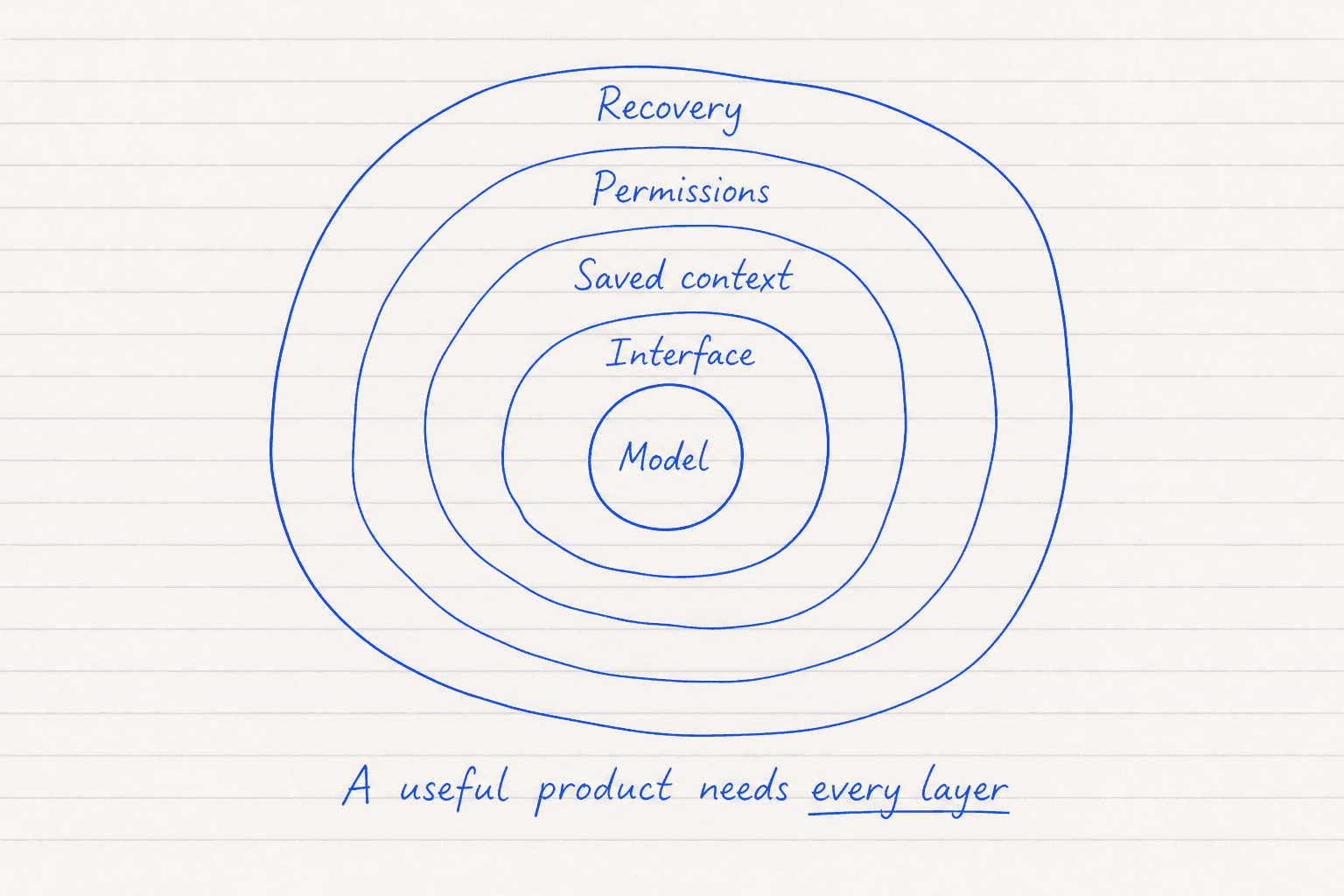
Sonnet 5 can provide the reasoning inside a tool, but people still need an interface, saved context, permissions and a way to recover when the task goes wrong. Those details decide whether the result feels like a useful app or another impressive demonstration.
Smaller businesses and independent creatives can now test an interface, saved context and permissions around one specific way of working.
Handwritten nested layers surround the model with an interface, saved context, permissions and recovery.
Checked sources