
The update
Presence is built for agents that have a real job to do
OpenAI introduced Presence on 22 July as a managed enterprise product for voice and chat agents. It is aimed at high-volume work where an agent may need to answer a customer, use a company system, take an approved action or hand the conversation to a person.
OpenAI says each deployment is scoped with its own team or a selected partner, and availability is currently limited to eligible enterprise customers. The early examples include billing support, insurance claims and internal IT requests.
Why it is useful
The agent begins with a defined job and clear boundaries
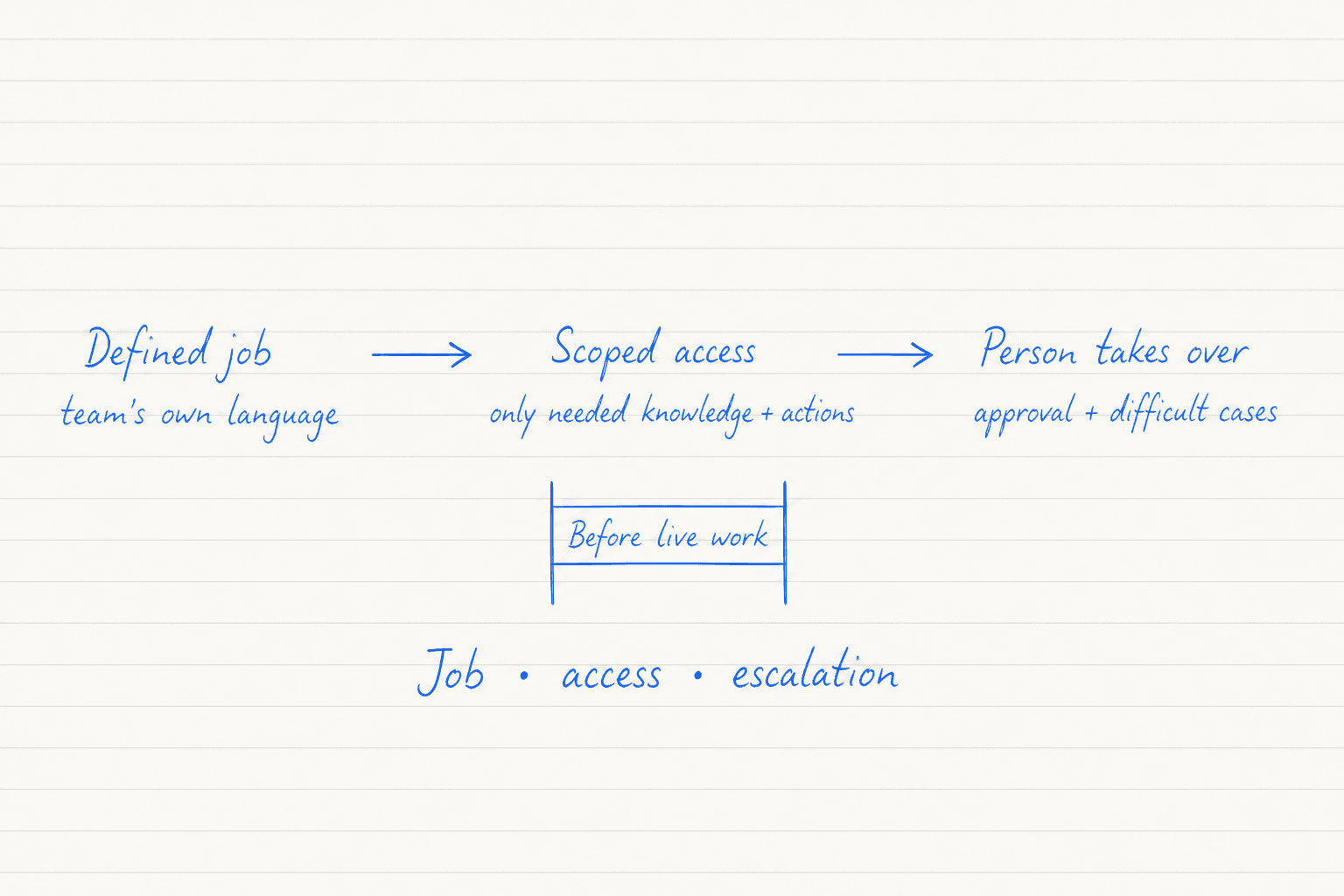
The product description starts with a specific job. The agent receives only the knowledge and system access needed for that job, while the business decides what it can do, when approval is required and when a person should take over.
The same sequence can guide smaller deployments. Give the agent a defined task, the context it needs and a visible review route before widening its access.
- Define the job in language the team already uses.
- Limit access to the information and actions the job requires.
- Decide where a person steps in before the agent reaches a difficult case.
A handwritten route moves from a job described in the team's language through scoped knowledge and actions to human approval and difficult cases before live work.
The takeaway
Reliable agents need attention after launch
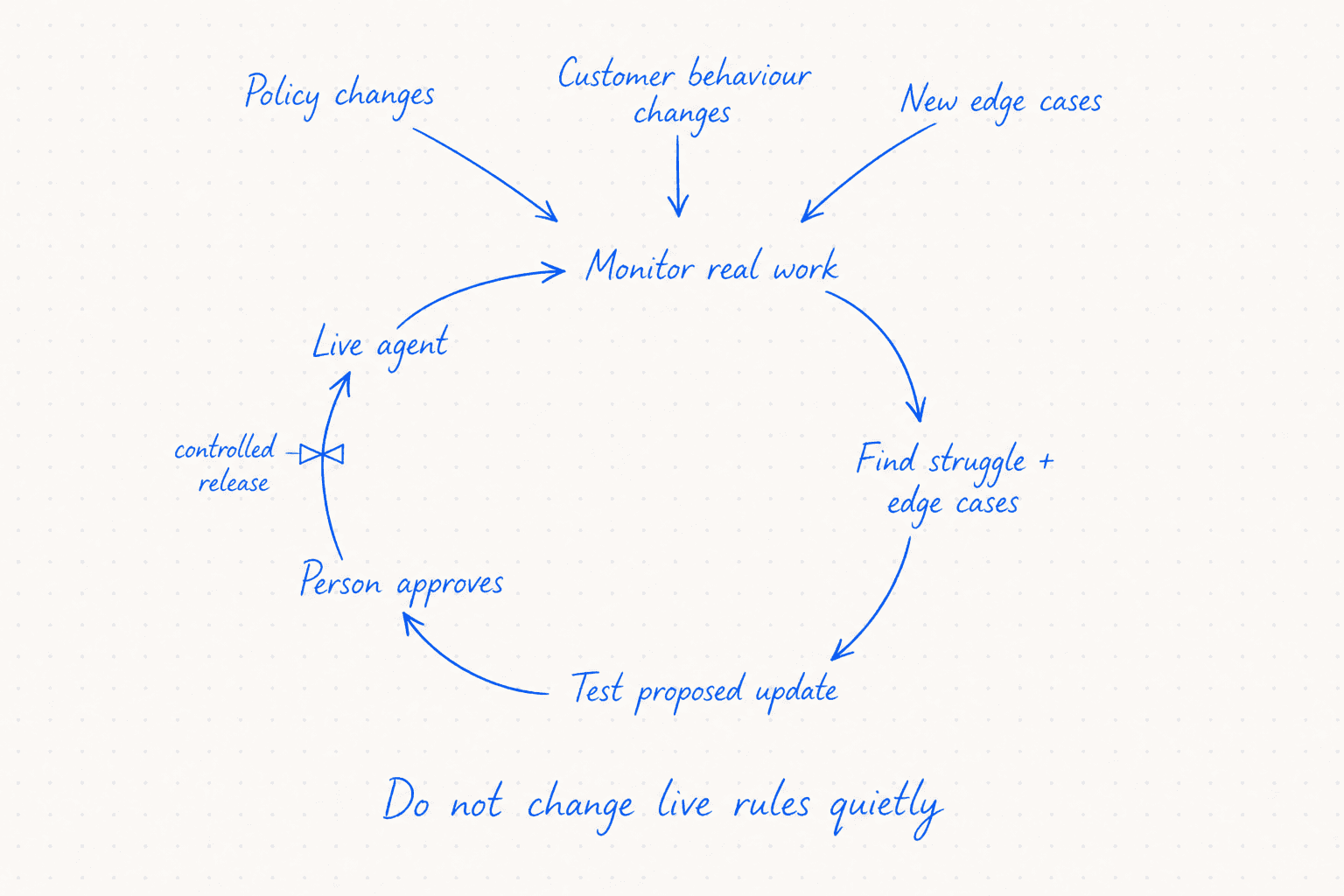
OpenAI also describes simulations, graders and production monitoring that expose where an agent is struggling. Proposed updates can then be tested and approved before they replace the version already in use.
AI inside a business keeps changing after launch as policies change, customers behave differently and edge cases appear. Monitoring and controlled updates let the team learn from those moments without quietly changing the agent’s rules.
A handwritten loop monitors a live agent, finds failures and edge cases, tests a proposed update and requires human approval before controlled release.
Checked sources